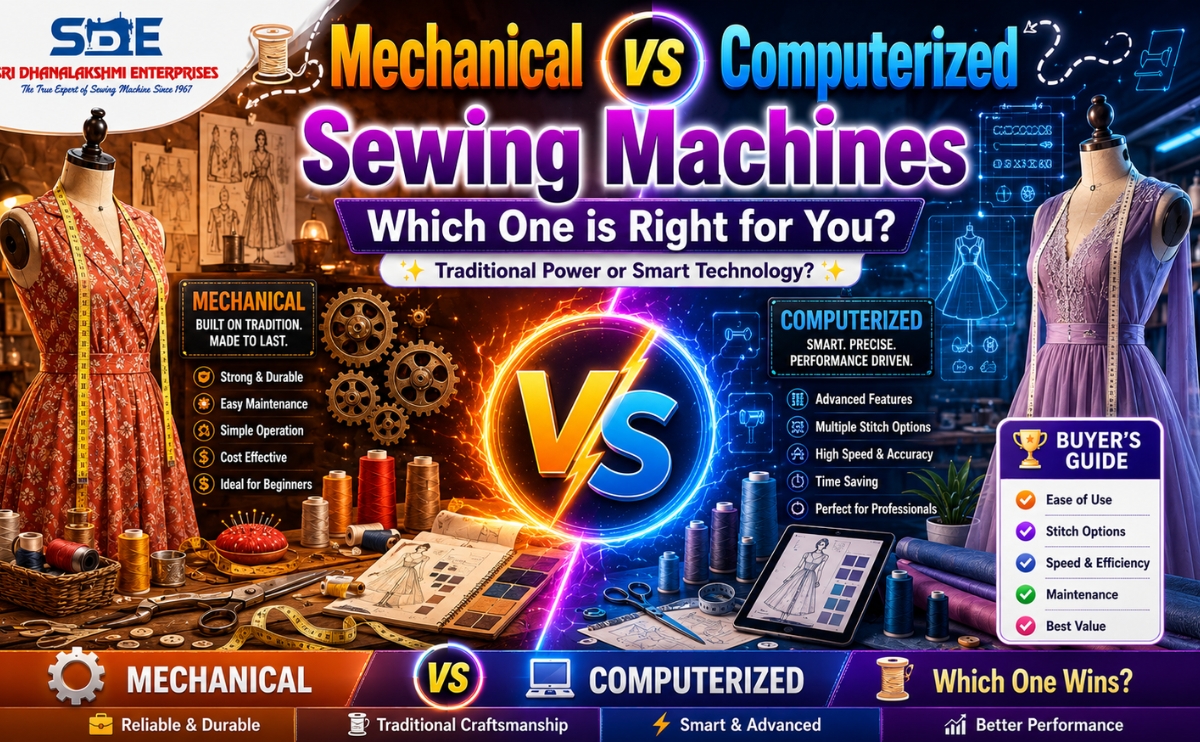
One of the most common questions people ask before buying a sewing machine is whether they should choose a mechanical sewing machine or a computerized sewing machine. Both types are widely used, both can produce excellent stitching results and both have their own advantages.
However, they are designed for different types of users.
Some buyers want a simple machine that is easy to operate, affordable and dependable for everyday sewing. Others want advanced features, decorative stitch options, automation and greater creative flexibility. This is where the choice between mechanical and computerized sewing machines becomes important.
Many people assume computerized machines are automatically better because they are newer and more advanced. Others believe mechanical machines are always the smarter choice because they are simpler and easier to maintain. In reality, neither assumption is completely correct.
The right sewing machine depends on your experience level, stitching requirements, project complexity, budget and future goals.
Whether you are a beginner, homemaker, tailoring student, boutique owner or fashion designer, understanding the differences between these two machine categories will help you make a more informed buying decision.
In this guide, we will compare mechanical and computerized sewing machines in detail, helping you determine which one is the better investment for your needs.
Understanding Mechanical Sewing Machines
Mechanical sewing machines are the traditional type of sewing machine that most people are familiar with. They operate using manual controls such as dials, knobs and levers to adjust stitch settings.
For decades, mechanical sewing machines have been used in homes, tailoring centers and sewing schools because of their simplicity and reliability.
Common features of mechanical sewing machines include:
- Manual stitch selection
- Adjustable stitch length
- Adjustable tension control
- Straight stitch options
- Zig-zag stitching depending on the model
- Basic buttonhole functionality in some machines
Mechanical machines focus on delivering essential sewing functions without relying on digital systems.
Understanding Computerized Sewing Machines
Computerized sewing machines use electronic controls and digital technology to simplify sewing operations.
Instead of adjusting settings manually, users can select stitch patterns and functions through buttons, touch controls or digital displays depending on the machine.
Computerized sewing machines are becoming increasingly popular among:
- Fashion design students
- Boutique owners
- Creative sewing enthusiasts
- Professional tailors
- Advanced home users
Common features may include:
- Digital stitch selection
- Multiple built-in stitch patterns
- Automatic needle positioning
- Speed control
- Decorative stitches
- Alphabet stitching on selected models
- Memory functions
- Automated sewing assistance
These machines are designed to provide convenience, consistency and creative flexibility.
Mechanical vs Computerized Sewing Machines: Major Differences
1. Ease of Use
One of the biggest deciding factors for many buyers is ease of operation.
Mechanical Sewing Machines
Mechanical machines use physical controls.
Users typically adjust:
- Stitch type
- Stitch length
- Thread tension
- Needle position
Because everything is controlled manually, users develop a strong understanding of how sewing machines work.
Advantages:
- Simple design
- Easy learning process
- Direct control over settings
- Less intimidating for traditional users
However, beginners may take some time to learn how different adjustments affect stitching.
Computerized Sewing Machines
Computerized machines automate many of these settings.
Users can often select a stitch pattern with the press of a button.
Advantages:
- User-friendly interface
- Reduced manual adjustments
- Faster setup
- Helpful guides and prompts
Many beginners find computerized machines easier because they reduce guesswork.
Verdict
For users who prefer simplicity and manual control, mechanical machines are excellent.
For users who prefer convenience and automation, computerized machines often provide a smoother experience.
2. Stitch Variety
This is where computerized machines often have a major advantage.
Mechanical Sewing Machines
Most mechanical machines offer:
- Straight stitch
- Zig-zag stitch
- A limited selection of utility stitches
These stitches are sufficient for many sewing tasks including:
- Alterations
- Repairs
- Basic garment construction
Computerized Sewing Machines
Computerized machines often provide:
- Decorative stitches
- Stretch stitches
- Quilting stitches
- Embroidery-style patterns
- Lettering functions on selected models
The expanded stitch library allows greater creativity and customization.
Verdict
If your sewing needs are basic, a mechanical machine may be sufficient.
If you enjoy creative sewing, decorative work or design experimentation, a computerized machine offers far more flexibility.
3. Speed Control
Mechanical Sewing Machines
Speed is usually controlled through the foot pedal.
Users must learn to maintain speed manually.
This provides flexibility but requires practice.
Computerized Sewing Machines
Many computerized machines include built-in speed control.
This allows users to:
- Set maximum speed
- Sew more accurately
- Maintain consistent stitching
This feature is especially helpful for beginners and detailed sewing projects.
Verdict
Computerized machines offer better speed management and control.
4. Precision and Accuracy
Mechanical Sewing Machines
Mechanical machines can produce excellent results when operated properly.
However, stitch consistency depends more heavily on user skill.
Computerized Sewing Machines
Computerized machines often provide:
- Consistent stitch formation
- Automatic adjustments
- Better stitch accuracy
This becomes especially useful for:
- Decorative work
- Fashion projects
- Precision stitching
Verdict
For projects requiring high precision, computerized machines often provide an advantage.
5. Learning Curve
Mechanical Sewing Machines
Learning a mechanical machine teaches users how sewing mechanics work.
Many experienced tailors recommend starting with mechanical machines because they build stronger fundamentals.
Computerized Sewing Machines
Computerized machines simplify many processes.
Users can begin sewing quickly without understanding every technical adjustment.
Verdict
Mechanical machines may offer a deeper learning experience.
Computerized machines often provide a faster learning path.
6. Maintenance Requirements
Mechanical Sewing Machines
Mechanical machines generally have:
- Simpler internal systems
- Fewer electronic components
- Easier maintenance
Many users appreciate their straightforward construction.
Computerized Sewing Machines
Computerized machines contain:
- Electronic components
- Digital controls
- Advanced systems
While they are reliable when maintained properly, servicing may be more specialized.
Verdict
Mechanical machines are generally simpler to maintain.
7. Durability
Mechanical Sewing Machines
Mechanical machines have earned a reputation for long-term reliability.
Many older machines continue functioning well after years of use.
Computerized Sewing Machines
Modern computerized machines are also highly durable when used appropriately.
However, their advanced electronics add another layer of complexity.
Verdict
Both machine types can offer excellent durability when properly maintained.
8. Sewing Project Types
Best Projects for Mechanical Machines
Mechanical machines are ideal for:
- Alterations
- Basic garment stitching
- Home repairs
- School projects
- Everyday sewing
Best Projects for Computerized Machines
Computerized machines are excellent for:
- Fashion design
- Decorative sewing
- Personalized projects
- Boutique work
- Creative sewing
Verdict
Your project type should strongly influence your decision.
9. Price Considerations
Mechanical Sewing Machines
Mechanical machines are generally more affordable.
This makes them attractive for:
- Beginners
- Budget-conscious buyers
- Occasional users
Computerized Sewing Machines
Computerized machines typically involve a higher investment because of their advanced capabilities.
However, they may provide greater long-term value for users who regularly utilize those features.
Verdict
Mechanical machines usually offer lower entry costs.
Computerized machines offer more features and automation.
Who Should Buy a Mechanical Sewing Machine?
A mechanical sewing machine is often the right choice for:
- Beginners on a budget
- Homemakers
- Occasional users
- Traditional sewing enthusiasts
- Basic tailoring learners
- Users focused on practical sewing tasks
If your projects involve repairs, alterations and simple garment construction, a mechanical machine may provide everything you need.
Who Should Buy a Computerized Sewing Machine?
A computerized sewing machine is often ideal for:
- Fashion design students
- Boutique owners
- Creative hobbyists
- Professional tailors
- Frequent sewing users
- Users interested in decorative stitching
If creativity, efficiency and advanced functionality are important to you, a computerized machine can be a worthwhile investment.
Common Myths About Computerized Sewing Machines
Myth 1: Computerized Machines Are Only for Professionals
Not true.
Many computerized machines are designed specifically for beginners and home users.
Myth 2: Mechanical Machines Are Outdated
Also not true.
Mechanical machines remain highly effective and continue to be widely used.
Myth 3: More Features Always Mean Better Value
Features only create value when you actually use them.
Buying a machine with hundreds of stitches that you never use may not be the smartest investment.
Common Buying Mistakes to Avoid
Buying Based on Features Alone
Focus on your actual sewing needs.
Ignoring Future Growth
Consider whether your sewing requirements may expand over time.
Choosing Only by Price
The cheapest machine may not provide the best long-term experience.
Not Seeking Expert Advice
A sewing machine is a long-term investment. Guidance from an experienced dealer can prevent costly mistakes.
Popular Brands Offering Mechanical and Computerized Sewing Machines
Several leading brands offer both categories.
Usha Sewing Machines
Offers mechanical, automatic and computerized options suitable for home users, students and tailors.
Singer Sewing Machines
Provides machines ranging from beginner-friendly mechanical models to advanced computerized solutions.
Brother Sewing Machines
Known for technology-focused sewing solutions, particularly computerized and creative sewing applications.
Customers should compare individual models rather than relying solely on brand names.
Why Buy from Sri Dhanalakshmi Enterprises?
Sri Dhanalakshmi Enterprises is a trusted sewing machine dealer in Hyderabad helping customers choose the right sewing machine based on real-world requirements.
Customers can explore:
- Mechanical sewing machines
- Computerized sewing machines
- Domestic sewing machines
- Industrial sewing machines
- Usha sewing machines
- Singer sewing machines
- Brother sewing machines
- Jack sewing machines
- Juki sewing machines
- Sewing machine accessories
Instead of simply selling products, Sri Dhanalakshmi Enterprises helps buyers understand which machine category best matches their goals, budget and sewing style.