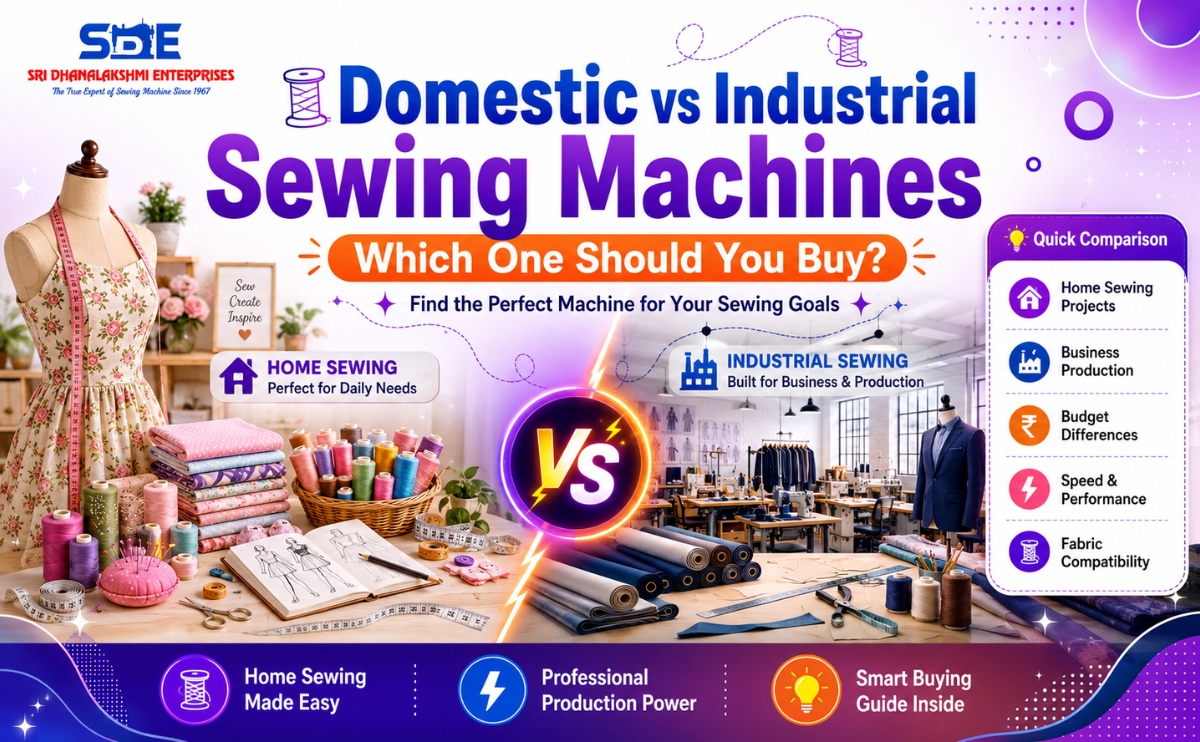
Buying a sewing machine is not just about choosing a brand or comparing prices. One of the biggest decisions buyers face is whether to invest in a domestic sewing machine or an industrial sewing machine. While both are designed to stitch fabrics, they are built for completely different purposes.
Many buyers make the mistake of purchasing a machine without understanding how they plan to use it. A homemaker may end up buying a machine that is far more powerful than necessary, while a tailor or boutique owner may struggle with a machine that cannot handle commercial workloads. Choosing the wrong machine often leads to frustration, reduced productivity, unnecessary expenses and poor stitching results.
The right sewing machine depends on your usage, stitching volume, fabric type, skill level and future goals. Whether you are learning sewing at home, running a tailoring shop, managing a boutique or planning to start a garment production unit, understanding the differences between domestic and industrial sewing machines is essential before making a purchase.
In this guide, we will compare domestic and industrial sewing machines in detail, helping you understand which type is the better investment for your specific needs.
Understanding Domestic Sewing Machines
Domestic sewing machines are designed primarily for household use. These machines are commonly found in homes, tailoring classes, fashion design institutes and among hobby sewing enthusiasts.
They are built to handle everyday sewing tasks such as:
- Dress alterations
- Blouse stitching
- School uniform repairs
- Fall and pico work
- Cushion covers
- Curtains
- Kidswear
- DIY sewing projects
- Hobby sewing
Domestic machines are generally compact, easy to use and suitable for light to moderate workloads. They are available in manual, electric, automatic zig-zag and computerized versions depending on the features required.
For most beginners and home users, a domestic sewing machine provides all the functionality needed for personal sewing projects.
Understanding Industrial Sewing Machines
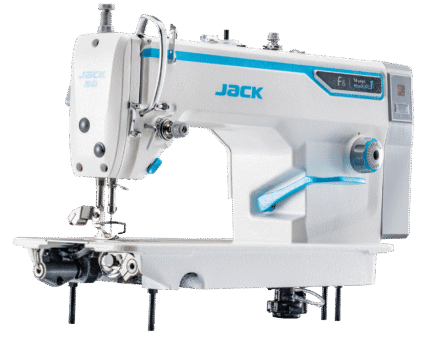
Industrial sewing machines are designed for commercial production environments. Unlike domestic machines, industrial machines are built to operate for long hours with consistent speed and precision.
These machines are commonly used in:
- Tailoring shops
- Boutiques
- Garment factories
- Uniform manufacturing units
- Export houses
- Textile production units
- Embroidery centers
- Commercial sewing operations
Industrial machines are engineered for durability, speed and productivity. They are designed to perform specific stitching functions continuously without compromising stitch quality.
Popular industrial machine categories include:
- Single needle lockstitch machines
- Overlock machines
- Interlock machines
- Flatlock machines
- Direct drive machines
- Computerized industrial sewing machines
- Walking foot machines
- Heavy-duty stitching machines
For businesses that rely on sewing output, industrial machines are often essential investments.
Domestic Sewing Machine vs Industrial Sewing Machine: Key Differences
Purpose of Use
This is the biggest difference between the two categories.
Domestic sewing machines are designed for occasional or moderate stitching. They are suitable for personal projects and limited tailoring work.
Industrial sewing machines are designed for commercial production. They are built to run continuously throughout the day while maintaining consistent performance.
If your goal is home stitching, a domestic machine is usually sufficient. If your goal is earning income through sewing or production, an industrial machine is often the better choice.
Speed Comparison
Domestic Sewing Machines
Domestic machines typically operate at lower speeds to provide better control for beginners and home users.
The slower speed helps users:
- Learn easily
- Maintain accuracy
- Handle different fabric types
- Perform detailed work
For home projects, speed is usually not a major concern.
Industrial Sewing Machines
Industrial sewing machines are designed for productivity.
Their higher operating speed allows businesses to:
- Complete more garments
- Increase daily output
- Reduce production time
- Improve efficiency
For tailoring shops and garment units, this increased speed directly impacts profitability.
Durability and Lifespan
Domestic Sewing Machines
Domestic machines are designed for regular but limited usage.
When maintained properly, they can provide years of reliable service for home stitching and occasional tailoring work.
However, they are not intended for continuous commercial use throughout the day.
Industrial Sewing Machines
Industrial machines are built with commercial durability in mind.
They are designed to:
- Handle long working hours
- Operate consistently
- Manage heavier workloads
- Support production environments
For businesses with daily stitching requirements, industrial machines offer superior long-term durability.
Stitch Quality Comparison
Many buyers assume industrial machines simply stitch faster. In reality, they are also designed for stitch consistency.
Domestic Machines
Domestic machines produce good stitch quality for household applications.
They perform well on:
- Cotton
- Polyester
- Linen
- Lightweight denim
- Dress materials
- Home furnishing fabrics
Industrial Machines
Industrial machines are engineered for precision and consistency, especially during long production runs.
This becomes important when:
- Producing uniforms
- Stitching bulk orders
- Running a tailoring business
- Manufacturing garments for sale
Consistent stitch quality improves garment appearance and customer satisfaction.
Fabric Handling Capabilities
Domestic Sewing Machines
Domestic machines work well with:
- Cotton
- Rayon
- Linen
- Polyester
- Dress materials
- Lightweight denim
- Home furnishing fabrics
While some domestic machines can handle thicker materials occasionally, they are generally optimized for lighter fabrics.
Industrial Sewing Machines
Industrial machines are better suited for:
- Denim
- Uniform materials
- Heavy cotton
- Canvas
- Multiple fabric layers
- Production fabrics
Businesses working with demanding materials often require industrial machines to maintain efficiency.
Flexibility and Stitch Options
Domestic Sewing Machines
One major advantage of domestic sewing machines is versatility.
Many models offer:
- Straight stitch
- Zig-zag stitch
- Decorative stitches
- Buttonholes
- Stretch stitches
- Quilting features
- Embroidery functions (in some models)
This makes them attractive for hobby sewing and creative projects.
Industrial Sewing Machines
Industrial machines are usually designed for specific tasks.
For example:
- Lockstitch machine = straight stitching
- Overlock machine = edge finishing
- Interlock machine = knitwear stitching
Rather than performing many functions, industrial machines focus on doing one task exceptionally well.
Space Requirements
Domestic Sewing Machines
Domestic machines are compact and easy to store.
They are ideal for:
- Apartments
- Small homes
- Study rooms
- Sewing corners
Many models can be stored when not in use.
Industrial Sewing Machines
Industrial machines usually require dedicated space.
They often include:
- Machine head
- Motor
- Stand
- Table
Because of their size, they are more suitable for tailoring shops and production facilities.
Noise Levels
Domestic Machines
Most domestic machines operate relatively quietly, making them suitable for home environments.
Industrial Machines
Industrial machines may generate more operational noise due to higher speeds and commercial motors.
Modern direct-drive industrial machines are quieter than older clutch motor machines, but they are still generally louder than domestic machines.
Maintenance Requirements
Domestic Sewing Machines
Domestic machines typically require:
- Cleaning
- Basic servicing
- Needle replacement
- Periodic maintenance
Maintenance needs are relatively simple.
Industrial Sewing Machines
Industrial machines require more regular maintenance because they operate continuously.
Proper maintenance ensures:
- Longer machine life
- Better stitch quality
- Reduced downtime
- Consistent productivity
Businesses should view maintenance as part of operational management.
Cost Comparison
Many buyers focus only on initial purchase cost.
However, the real consideration should be overall value.
Domestic Sewing Machines
Domestic machines are generally more affordable.
They are suitable for:
- Learning sewing
- Personal use
- Small home projects
- Limited tailoring work
Industrial Sewing Machines
Industrial machines require a higher investment but provide benefits such as:
- Faster production
- Better productivity
- Commercial durability
- Higher output
For businesses, the return on investment often outweighs the higher initial cost.
Which Machine Is Best for Beginners?
For beginners, domestic sewing machines are usually the better choice.
Reasons include:
- Easier operation
- Better learning experience
- Lower investment
- Multiple stitch options
- More flexibility
A beginner can learn essential sewing skills without being overwhelmed by commercial equipment.
Which Machine Is Best for Home Tailoring?
This depends on workload.
If you are:
- Learning tailoring
- Taking occasional orders
- Stitching for family and friends
A domestic sewing machine may be enough.
If you are:
- Handling regular customer orders
- Working daily
- Expanding your tailoring business
An industrial sewing machine can improve productivity significantly.
Which Machine Is Best for Boutique Owners?
Boutiques often deal with custom garments, alterations and production work.
For boutique owners:
- Domestic machines work for small-scale operations.
- Industrial machines become valuable as order volumes increase.
Many successful boutiques use a combination of both machine types.
Which Machine Is Best for Fashion Design Students?
Fashion design students often need:
- Stitch variety
- Decorative functions
- Learning flexibility
Domestic computerized sewing machines are usually more suitable than industrial machines during the learning phase.
As students enter professional production environments, industrial machines become more relevant.
When Should You Upgrade to an Industrial Sewing Machine?
You should consider upgrading when:
- Orders are increasing
- Production speed becomes important
- Machine downtime affects work
- Daily stitching hours increase
- Fabric requirements become more demanding
Upgrading at the right time can improve efficiency and profitability.
Common Buying Mistakes to Avoid
Buying Industrial Machines Too Early
Many beginners assume industrial machines are automatically better.
In reality, industrial machines may be unnecessary for simple home stitching.
Buying Domestic Machines for Commercial Production
Using domestic machines for heavy commercial workloads often leads to reduced productivity and faster wear.
Ignoring Future Growth
Consider where your sewing journey will be in the next few years.
A machine that supports future growth can provide better long-term value.
Choosing Based Only on Price
Always consider:
- Usage
- Productivity
- Durability
- Service support
- Long-term benefits
Why Buy from Sri Dhanalakshmi Enterprises?
Sri Dhanalakshmi Enterprises is a trusted sewing machine dealer in Hyderabad offering:
- Domestic sewing machines
- Industrial sewing machines
- Computerized sewing machines
- Usha sewing machines
- Singer sewing machines
- Brother sewing machines
- Jack sewing machines
- Juki sewing machines
- Sewing machine accessories
Instead of recommending the most expensive machine, the team helps customers choose based on actual requirements, workload and budget.
Whether you are a beginner, home user, tailor, boutique owner or garment manufacturer, Sri Dhanalakshmi Enterprises can guide you toward the right investment.