Starting or upgrading a tailoring business involves several important decisions, but choosing the right sewing machine is one of the most important. A machine that works perfectly for occasional home stitching may not be designed for hours of continuous tailoring, while an industrial machine may be unnecessary for someone handling only a small number of orders.
This is where the portable vs industrial sewing machine comparison becomes important.
Portable sewing machines are compact, convenient and suitable for home sewing, learning, alterations and selected small-scale tailoring work. Industrial sewing machines are designed primarily for professional environments where speed, consistency and continuous production are important.
The right choice depends on your daily order volume, type of garments, working hours, fabric types, available space and future business plans.
This guide compares portable and industrial sewing machines from a tailoring-business perspective so you can understand which type is better suited to your work.
Portable vs Industrial Sewing Machine: Quick Comparison
Factor | Portable Sewing Machine | Industrial Sewing Machine |
Primary Use | Home & light tailoring | Professional production |
Design | Compact / Portable | Table-Mounted |
Workload | Light to Moderate | Regular / High Volume |
Sewing Speed | Generally Lower | Generally Higher |
Portability | High | Low |
Workspace Required | Less | Dedicated Space |
Stitch Variety | Often Multiple Stitches | Often Function-Specific |
Decorative Features | Common on Many Models | Depends on Machine Type |
Best For | Home Users, Beginners, Small Jobs | Tailors, Boutiques, Production |
Continuous Sewing | Limited Compared with Industrial | Designed for Professional Workloads |
Specialised Operations | Limited | Wide Range of Dedicated Machines |
Business Expansion | Useful for Small-Scale Work | Better Suited to Growing Production |
The biggest difference is not simply speed. It is how the machine is designed to be used.
Understanding Portable and Industrial Sewing Machines
Before deciding which one belongs in your tailoring setup, it is important to understand what each category actually offers.
What Is a Portable Sewing Machine?
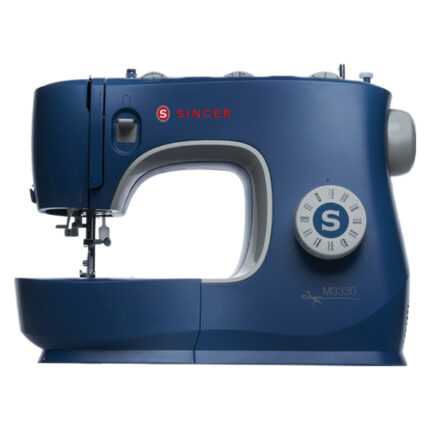
A portable sewing machine is generally a compact machine designed for home and personal sewing.
Many portable models provide multiple built-in stitches, zig-zag sewing, buttonholes and other convenient functions within a single machine.
Depending on the model, you may also get features such as:
- Automatic needle threading
- Adjustable stitch length
- Adjustable stitch width
- Multiple decorative stitches
- Buttonhole functions
- LED sewing lights
- Free-arm sewing
- Computerized stitch selection
Their compact construction means they can usually be placed on a suitable table when required and stored away afterwards.
This makes portable machines particularly convenient for home users and people starting a small tailoring activity without a dedicated commercial workspace.
What Is an Industrial Sewing Machine?
An industrial sewing machine is designed primarily for professional and production-oriented sewing.
Instead of trying to perform many unrelated sewing functions within one compact machine, industrial equipment is often selected for a particular operation or production requirement.
For example, a professional tailoring or garment setup may use separate machines for:
- Straight stitching
- Overlocking
- Interlocking
- Buttonholes
- Button attaching
- Bartacking
- Heavy-material stitching
- Other specialised operations
Industrial machines are typically installed with dedicated tables and motors, creating a permanent sewing workstation.
For businesses processing garments regularly throughout the working day, this type of setup can provide significant advantages.
Portable vs Industrial Sewing Machine: Detailed Comparison
1. Daily Sewing Workload
The first question a tailoring business should ask is:
How many hours will the machine operate every day?
If you are sewing occasionally from home, making garments for a limited number of customers or handling alterations alongside another occupation, a portable machine may satisfy many of your requirements.
However, if the machine will operate for several hours each day with a regular flow of customer orders, an industrial machine is generally more appropriate for that type of workload.
This distinction becomes increasingly important as your business grows.
A tailoring machine should be selected according to the work it will actually perform rather than simply according to its purchase price.
2. Sewing Speed
Speed directly affects productivity in a busy tailoring environment.
Portable machines provide practical sewing speeds for home and light tailoring work. For someone sewing one garment at a time without strict production targets, this may be sufficient.
Industrial machines are generally designed for faster professional sewing.
When a tailor repeatedly completes long seams across multiple garments, the time saved on each piece can accumulate significantly over an entire working day.
However, beginners should not choose a machine solely because it is faster.
Control, accuracy and sewing skill remain essential.
3. Continuous Operation
This is one of the most important differences between portable and industrial machines.
Portable machines are primarily designed around home and general-purpose sewing requirements.
Industrial machines are designed with professional production environments in mind, where sewing may continue for extended periods.
For a business with regular daily orders, machine workload should therefore be a major part of the buying decision.
4. Stitch Variety
Portable machines often have an advantage when it comes to having many stitch options within a single unit.
Depending on the model, one portable machine may provide:
- Straight stitches
- Zig-zag stitches
- Stretch stitches
- Decorative stitches
- Buttonholes
- Other creative stitch patterns
This versatility can be excellent for home users.
Industrial machines often take a different approach.
A particular industrial machine may perform fewer types of stitches but be designed to perform its intended operation efficiently and repeatedly.
For example, a straight-stitch industrial machine is primarily selected for professional straight stitching rather than decorative stitch variety.
5. Garment Production
Imagine two different users.
The first stitches clothes for family members and accepts a few alteration orders every week.
The second runs a tailoring shop with customers dropping off garments throughout the day.
Their machine requirements are not the same.
A portable machine can make sense for the first user because flexibility, affordability and compactness may matter more than production speed.
For the second user, productivity and continuous operation become more important, making industrial equipment worth considering.
6. Space Requirements
Portable machines are convenient when workspace is limited.
They can usually be placed on a table, moved when necessary and stored when not in use.
Industrial machines generally require a dedicated setup with a table and motor system.
For a tailoring shop, this is rarely a major disadvantage because the machine is expected to remain in a permanent workspace.
For someone operating from a bedroom or compact home environment, however, available space can significantly influence the decision.
7. Portability
As the name suggests, portable machines are much easier to move.
This can be useful for:
- Sewing students
- Home tailors
- Users with temporary workspaces
- People attending sewing classes
- Occasional sewing
- Homes without a dedicated sewing room
Industrial machines are intended to function as permanent workstations.
If mobility is essential, a portable machine has a clear practical advantage.
8. Fabric Requirements
The fabric you regularly stitch should also influence machine selection.
Everyday garments made from commonly used fabrics may be manageable with an appropriate portable machine, depending on the model, needle, thread and fabric construction.
Businesses working regularly with demanding materials or specialised garment-production requirements should select equipment specifically designed for those applications.
Do not assume that every industrial machine automatically handles every fabric.
Industrial machines themselves come in different configurations for different materials and operations.
9. Precision and Consistency
Tailoring businesses need consistent results.
When the same sewing operation is repeated across many garments, a professional setup designed around that task can improve workflow.
This is one reason industrial machines are widely used in professional tailoring and garment-production environments.
Portable machines can also produce excellent sewing results when correctly operated, but their primary advantage is versatility rather than production-line specialisation.
10. Learning Curve
Portable mechanical machines are often approachable for beginners because many are designed for general home use.
A learner can practise straight stitching, zig-zag sewing, buttonholes and other techniques using one machine.
Industrial machines can feel considerably faster to someone who has never used one before.
Proper machine handling and speed control are therefore important when transitioning from home sewing to professional equipment.
Which Machine Is Better for a Home-Based Tailoring Business?
A home-based tailoring business can fall anywhere between occasional paid sewing and full-time professional work.
If you are accepting only a limited number of orders and primarily doing:
- Simple alterations
- Minor repairs
- Occasional garment stitching
- Personalised home projects
a good portable machine may be sufficient initially.
The advantage is that you can use one compact machine for several different types of sewing without dedicating significant space to industrial equipment.
However, the decision changes as order volume grows.
If you begin sewing for several hours each day and customers expect faster turnaround, moving important operations to industrial equipment can improve your workflow.
Which Machine Is Better for a Professional Tailoring Shop?
For a professional tailoring shop handling regular daily orders, industrial machines generally become much more relevant.
A typical tailor may spend much of the day performing straight-stitch garment construction.
Using equipment designed for professional workloads can help create a more efficient production setup.
Depending on the business, the shop may eventually use different machines for different operations rather than expecting one machine to perform everything.
For example, a growing tailoring setup might combine:
Industrial straight-stitch machine – primary garment construction
Overlock machine – seam finishing
Portable or computerized machine – decorative and specialised home-style stitch applications
This approach allows each machine to perform the work it is best suited for.
Portable vs Industrial Machine for Boutique Businesses
Boutiques have slightly different requirements from conventional alteration shops.
A boutique may handle:
- Custom dresses
- Blouses
- Kurtis
- Designer garments
- Decorative stitching
- Sample development
- Alterations
- Small production batches
For this type of business, the choice does not always have to be portable or industrial.
A combination can be more practical.
An industrial machine can handle regular garment construction, while a portable or computerized machine can provide decorative stitches and functions that a dedicated industrial straight-stitch machine may not offer.
As the boutique grows, additional specialised machines can be added according to production requirements.
Portable vs Industrial Sewing Machine for Beginners Starting a Business
If you are completely new to sewing and are still learning, immediately investing in several industrial machines may not be necessary.
A portable mechanical machine can help you learn:
- Machine threading
- Bobbin winding
- Straight stitching
- Zig-zag sewing
- Seam construction
- Fabric handling
- Buttonholes
- Basic garment techniques
Once you understand sewing and begin receiving regular orders, you can evaluate where an industrial machine would improve productivity.
On the other hand, if you already have tailoring experience and are opening a dedicated shop with confirmed customer demand, starting with suitable industrial equipment may make more practical sense.
When Should You Upgrade from Portable to Industrial?
There is no universal number of garments that automatically means it is time to upgrade.
Instead, look for practical signs.
Your Machine Is Running for Long Hours
If tailoring has moved from occasional sewing to several hours of work every day, your equipment requirements have changed.
Customer Orders Are Increasing
A growing order book creates pressure to complete garments efficiently without compromising stitching quality.
Sewing Speed Is Limiting Productivity
If machine speed and workflow are becoming bottlenecks, professional equipment may help improve output.
You Repeat the Same Operation Frequently
If most of your work involves repeated straight stitching or another specific sewing operation, a dedicated industrial machine may be more suitable than a multipurpose portable machine.
You Are Expanding Your Tailoring Shop
Adding staff or increasing production usually requires equipment designed around commercial workflows.
Do You Need Both Portable and Industrial Sewing Machines?
For many established tailoring businesses, this can be a practical approach.
The two machine categories serve different purposes rather than simply replacing one another.
An industrial machine can become the primary production machine, while a portable machine can remain useful for stitch applications that the industrial machine does not provide.
For example, a tailoring shop may use industrial equipment for regular garment construction but retain a portable zig-zag machine for selected sewing requirements.
A boutique may combine industrial machines with computerized sewing equipment for creative applications.
The goal is to build a sewing setup around the work your business actually receives.
Common Mistakes When Choosing a Sewing Machine for Tailoring
Buying Only Based on Price
The cheapest machine is not necessarily the most economical choice for a business.
Consider workload, productivity and intended application.
Choosing Based Only on Stitch Count
A machine with dozens of decorative stitches is not automatically more useful for a professional tailor who spends most of the day performing straight-stitch garment construction.
Ignoring Future Order Volume
Think about where you expect your tailoring business to be in the next few years.
Assuming Every Industrial Machine Does Everything
Industrial sewing machines can be highly specialised. Choose the machine according to the sewing operation you need.
Ignoring Service Support
Downtime can directly affect customer delivery schedules in a tailoring business.
Access to reliable service and product guidance should therefore form part of your buying decision.
How to Choose the Right Sewing Machine for Your Tailoring Business
Before purchasing, consider these six questions:
- How many hours will I sew each day?
- What type of garments will I stitch?
- Which fabrics will I work with most often?
- Do I need multiple decorative stitches or primarily straight stitching?
- How many customer orders do I expect to handle?
- Am I buying for my current workload or planning for business growth?
Your answers will usually make it much easier to decide between portable and industrial equipment.
Buy Portable and Industrial Sewing Machines in Hyderabad
Choosing the right machine can directly influence the workflow and productivity of a tailoring business.
Sri Dhanalakshmi Enterprises has been serving sewing machine customers in Hyderabad since 1960, helping home users, professional tailors, boutiques and businesses choose equipment according to their sewing requirements.
If you need flexibility for home tailoring and smaller workloads, explore our range of Domestic Sewing Machines in Hyderabad.
For professional tailoring shops and regular production requirements, you can explore our range of Industrial Sewing Machines in Hyderabad.
Customers looking for advanced stitch selection and automated sewing functions can also consider Computerized Sewing Machines in Hyderabad.
Sri Dhanalakshmi Enterprises offers sewing machines from established brands including Jack, Singer, Brother, Viking and Pfaff, along with our own Metal Wheel brand.
Instead of choosing a machine based only on price or specifications, consider your actual workload, garments, fabric requirements and future business plans.
Contact Sri Dhanalakshmi Enterprises for current machine availability, latest pricing and guidance in choosing sewing equipment for your tailoring business.