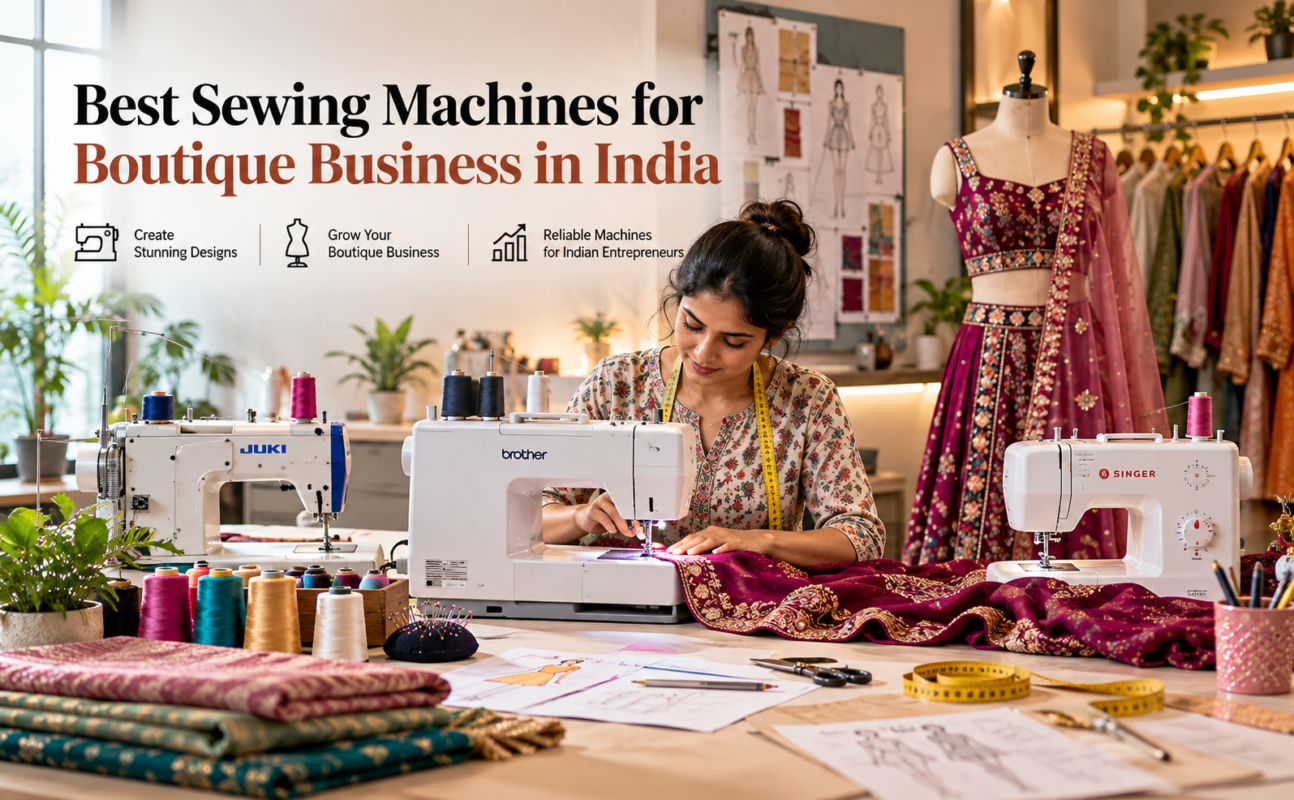
Starting a boutique business requires creativity, tailoring skills and the right equipment to produce well-finished garments. Whether you are planning to open a small home-based boutique, establish a ladies’ tailoring shop or expand an existing fashion business, choosing the right sewing machine is one of the most important investments you will make.
The best sewing machines for boutique business in India depend on the garments you stitch, your daily order volume, fabric requirements and the services you plan to offer. While a domestic sewing machine may be sufficient for beginners and small tailoring businesses, professional boutiques often benefit from industrial sewing machines, overlock machines and specialized embroidery equipment.
In this guide, we will explore the different sewing machines suitable for boutique businesses, recommended models, important buying considerations and practical tips for setting up an efficient tailoring workspace.
Why Choosing the Right Sewing Machine Matters for Your Boutique Business
A boutique business involves much more than basic garment stitching. Depending on customer requirements, you may need to work with cotton, silk, georgette, satin, denim, lining fabrics and embellished materials. Each fabric requires appropriate handling to achieve clean seams, accurate fitting and professional finishing.
Choosing the right sewing machine helps maintain consistent stitching quality while reducing unnecessary interruptions during garment production. A suitable machine can also make daily tailoring operations more comfortable and efficient, especially when working on multiple customer orders.
Your sewing equipment should match the services your boutique provides. A business specializing in blouse stitching may have different requirements from a boutique producing designer dresses, embroidered garments or ready-to-wear clothing.
Rather than purchasing machines based only on popularity or price, it is important to understand how each type of sewing machine contributes to your boutique’s workflow.
Best Types of Sewing Machines for Boutique Business in India
Different sewing machines are designed for different applications. Understanding their purpose will help you decide which machines are essential for your business and which can be added as your boutique grows.
1. Domestic Sewing Machines for Home-Based Boutiques
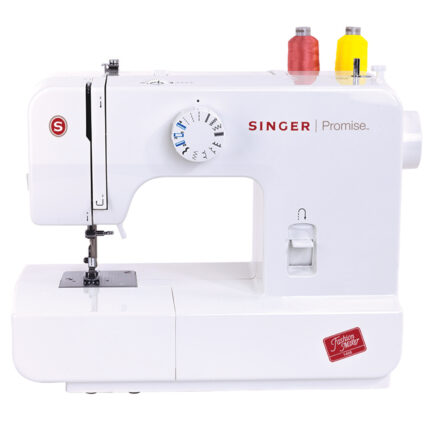
Domestic sewing machines are suitable for individuals starting small tailoring businesses from home. They are generally compact, convenient to operate and designed for common stitching requirements such as garment construction, alterations and decorative sewing, depending on the model.
For boutique owners handling a limited number of orders, a domestic sewing machine can provide a practical balance between flexibility and ease of use.
These machines are commonly used for:
- Basic blouse and kurti stitching
- Simple dressmaking
- Clothing alterations
- Children’s garments
- Everyday sewing projects
- Utility and decorative stitching, depending on the model
Domestic models are particularly useful when working space is limited or when a boutique is still developing its customer base.
For example, the Brother GS3700 Sewing Machine is an option worth exploring for home-based boutique owners looking for a versatile sewing machine.
However, domestic machines are not automatically suitable for continuous commercial production. Always consider the manufacturer’s recommended workload before selecting one for daily business use.
2. Industrial Sewing Machines for Professional Boutique Operations
Industrial sewing machines are commonly used in tailoring shops, garment production units and professional boutiques where stitching forms a major part of daily operations.
Unlike general-purpose domestic machines, many industrial models are designed to perform specific stitching operations efficiently.
Industrial straight-stitch machines are particularly useful for garment construction, including stitching seams, attaching garment components and performing repetitive tailoring operations.
They are often preferred for:
- Regular blouse and salwar stitching
- Kurti and dress construction
- High-volume tailoring orders
- Professional garment production
- Repetitive straight-stitch operations
For boutique owners planning to handle a steady flow of customer orders, industrial machines can be an important investment.
The Jack F5 Direct Drive Sewing Machine is one model worth evaluating for professional straight-stitch applications.
It is important to remember that an industrial straight-stitch machine cannot replace every specialized sewing machine. Additional equipment may still be required for overlocking, decorative stitching and embroidery.
3. Computerized Sewing Machines for Designer Boutique Work
Computerized sewing machines are useful for boutique businesses that require a variety of stitch patterns and additional sewing functions.
Depending on the model, these machines may offer electronic stitch selection, adjustable stitch settings, decorative patterns and other convenience features.
They can be valuable for boutiques producing custom garments where appearance and creative detailing are important.
Common applications include:
- Decorative stitching
- Custom dressmaking
- Utility stitch variations
- Creative garment detailing
- Personalized sewing projects
Computerized machines can be particularly useful for boutique owners who want greater flexibility without purchasing separate equipment for every basic decorative stitch.
However, it is important to check the individual model’s capabilities before purchasing. Not every computerized sewing machine supports embroidery, and the available stitch functions vary considerably.
4. Embroidery Machines for Premium Boutique Designs
Embroidery machines help boutique businesses create decorative designs, personalized patterns and customized garments.
They can be especially valuable for boutiques offering bridal wear, festive clothing, children’s outfits, monogramming and custom fashion products.
An embroidery machine can support services such as:
- Embroidered blouse designs
- Personalized clothing
- Decorative garment motifs
- Names and monograms
- Customized fashion accessories
- Boutique branding and logo embroidery
For boutique owners planning to introduce machine embroidery, the Brother F540E Embroidery Machine is a relevant model to consider.
Before investing in embroidery equipment, evaluate the embroidery field size, design compatibility, supported fabrics, production requirements and operator learning curve.
A dedicated embroidery machine is not a substitute for a regular garment construction machine. Most boutiques offering embroidery will still need equipment for stitching and assembling garments.
5. Overlock Sewing Machines for Professional Garment Finishing
Overlock sewing machines are widely used for finishing fabric edges and improving the appearance of garment seams.
When fabric edges are left unfinished, certain materials can fray after repeated handling or washing. An overlock machine helps secure these edges and produces a neater interior finish.
Boutiques commonly use overlock machines for:
- Finishing raw fabric edges
- Preventing excessive fraying
- Garment seam finishing
- Working with suitable knit fabrics
- Improving the appearance of finished garments
For businesses producing complete garments, an overlock machine is often one of the most useful additions after the primary stitching machine.
Although some domestic machines offer overcasting stitches, their operation differs from that of a dedicated overlock machine.
6. Coverstitch and Interlock Machines for Knitwear
Boutiques working with stretch garments may need specialized equipment for knit fabrics.
Coverstitch machines are commonly used to create flexible hems and certain types of topstitching on knitted garments. Industrial interlock equipment is also used for specific knitwear construction and finishing operations.
These machines can be useful for businesses producing:
- T-shirts
- Leggings
- Stretch dresses
- Sportswear
- Children’s knitwear
- Casual knitted garments
The term interlock machine is sometimes used broadly in tailoring discussions, so buyers should confirm the exact stitch type and operation before purchasing.
If your boutique mainly stitches woven blouses, kurtis and traditional garments, this type of equipment may not be necessary initially.
Which Sewing Machine Is Best for Different Boutique Requirements?
The ideal sewing machine depends on your core business activities.
|
Boutique Requirement
|
Recommended Machine Type
|
Main Advantage
|
|
Home-based tailoring
|
Domestic sewing machine
|
Versatility and compact operation
|
|
Professional blouse stitching
|
Industrial straight-stitch machine
|
Efficient garment construction
|
|
Designer garment detailing
|
Computerized sewing machine
|
Additional utility and decorative stitch options
|
|
Embroidered garments
|
Embroidery machine
|
Personalized designs and decorative work
|
|
Professional edge finishing
|
Overlock sewing machine
|
Neat seam and fabric-edge finishing
|
|
Knitwear and stretch garments
|
Suitable overlock or coverstitch equipment
|
Specialized knit garment operations
|
|
High-volume garment construction
|
Industrial sewing machine
|
Designed for repetitive commercial stitching
|
A boutique handling different types of garments may eventually require more than one machine. However, purchasing every machine at the beginning is rarely necessary.
Important Features to Consider When Buying a Boutique Sewing Machine
Before investing in a sewing machine, compare the features that matter most for your business.
Stitching Quality and Consistency
Professional garments require uniform seams and reliable stitch formation. Uneven stitching, skipped stitches and frequent thread problems can increase rework and affect customer satisfaction.
Whenever possible, test a machine using the same types of fabric, thread and sewing operations you expect to handle regularly.
Fabric Compatibility
Boutiques may work with a wide range of materials, from lightweight georgette to heavier cotton and layered garments.
A suitable machine should be selected based on the fabrics you stitch most frequently.
Needle selection, thread quality, presser foot pressure and machine settings also influence sewing performance.
Do not assume that a machine can stitch every fabric simply because it is described as heavy-duty or professional.
Daily Stitching Workload
Consider how many garments you expect to produce each day.
A machine used occasionally for home tailoring has different operating requirements from one used throughout the working day in a professional tailoring shop.
If you are planning regular production, pay particular attention to the machine’s intended duty cycle, operational comfort and maintenance requirements.
Ease of Operation
A complicated machine is not necessarily the best machine for your boutique.
Operators should be comfortable with threading, bobbin handling, stitch adjustments and everyday controls.
When multiple tailors use the same machine, straightforward operation can also make training easier.
Maintenance and Service Support
Regular maintenance is essential for reliable machine performance.
Before purchasing, enquire about cleaning requirements, spare parts, recommended servicing and support arrangements.
Convenient access to qualified service personnel can be particularly important for businesses that depend on their sewing machines every day.
Budget and Long-Term Investment
The purchase price should be considered alongside the machine’s usefulness for your business.
A cheaper machine may appear attractive initially, but it may not be the most economical choice if it cannot handle your intended workload.
Evaluate the total investment, including compatible accessories, additional equipment and maintenance needs.
Best Sewing Machine Setup for a Small Boutique Business
One common mistake among new boutique owners is attempting to purchase several machines before they have established consistent customer demand.
A better approach is to build your equipment setup gradually.
Stage 1: Starting a Home-Based Boutique
Begin with one reliable sewing machine suitable for your core stitching work.
If your services focus on basic alterations, blouse stitching and simple garments at a modest volume, a suitable domestic machine may be sufficient.
At this stage, invest in essential sewing tools, quality threads, appropriate needles, measuring equipment and good workspace lighting.
Stage 2: Handling Regular Tailoring Orders
As customer orders increase, consider investing in a suitable industrial straight-stitch machine.
An overlock machine may also become important when you begin producing larger numbers of complete garments.
This combination helps separate garment construction from finishing work.
Stage 3: Expanding into Designer and Customized Garments
If customers frequently request embroidery, decorative details or specialized garment designs, additional equipment may help expand your services.
A computerized sewing machine or embroidery machine could become a worthwhile investment depending on your business direction.
The decision should be based on actual customer demand rather than purchasing advanced features that may remain unused.
Domestic vs Industrial Sewing Machines: Which Is Better for a Boutique?
Both domestic and industrial sewing machines have a place in boutique businesses.
|
Feature
|
Domestic Sewing Machine
|
Industrial Sewing Machine
|
|
Main application
|
Home sewing and lighter tailoring
|
Professional stitching operations
|
|
Workload
|
Depends on model; generally suited to lighter workloads
|
Built for specific commercial applications
|
|
Stitch variety
|
Often offers multiple stitch options
|
Frequently designed for specific stitch operations
|
|
Workspace
|
Usually compact
|
Often requires a dedicated worktable
|
|
Operator experience
|
Suitable for beginners and experienced users
|
May require additional familiarization
|
|
Best suited for
|
Home boutiques and lower-volume work
|
Professional tailoring and regular production
|
If you are uncertain which option suits your requirements, our guide to Domestic vs Industrial Sewing Machines explains their differences in more detail.
For a boutique primarily handling custom garments in smaller quantities, a suitable domestic machine may offer sufficient flexibility.
For businesses completing repetitive stitching tasks throughout the day, an industrial machine may be the more appropriate investment.
Common Mistakes to Avoid When Buying Sewing Machines for Boutique Businesses
Buying a Machine Based Only on Price
A low purchase price does not guarantee good value.
Consider the machine’s intended applications, construction, operational convenience and suitability for your daily work.
Choosing a Machine Without Considering Fabric Requirements
A machine that performs well on ordinary cotton may require different settings or may not be appropriate for certain delicate, stretch or heavy materials.
Always evaluate a model according to your primary fabric requirements.
Ignoring Garment Finishing Equipment
Boutique owners sometimes focus entirely on the main stitching machine.
However, well-finished seams, hems and garment edges are important for delivering professional results.
Plan for appropriate finishing equipment as your business develops.
Investing in Advanced Machines Too Early
Embroidery and computerized sewing equipment can offer additional capabilities, but they may not be essential for every new boutique.
Start with machines that support your most common orders and introduce specialized equipment when there is a practical business need.
Overlooking Maintenance
Poor maintenance can lead to preventable stitching issues and production delays.
Follow manufacturer guidance for cleaning, lubrication where required, needle replacement and periodic servicing.
How to Choose the Right Sewing Machine for Your Boutique Business
Before purchasing a machine, answer a few practical questions.
What garments will you stitch most often?
A boutique focusing on designer blouses may require a different setup from a business specializing in T-shirts or embroidered clothing.
How many customer orders do you expect to handle?
A small home-based business may have modest equipment requirements, while a busy tailoring shop will need machines suitable for more regular operation.
Do you need decorative stitching or embroidery?
If your business focuses on basic garment construction, specialized design functions may not be a priority.
Will you work with different fabric types?
Identify your most common fabrics and choose a machine capable of handling the relevant sewing operations.
Are you planning to expand your boutique?
Consider whether your initial equipment can continue supporting your business as order volume increases.
A carefully planned purchase helps you avoid unnecessary expenditure while establishing a reliable foundation for your tailoring operations.
Where to Buy Sewing Machines for Boutique Business in Hyderabad?
Choosing the right sewing machine is easier when you can compare models and receive guidance based on your stitching requirements.
Sri Dhanalakshmi Enterprises is an established sewing machine dealer in Hyderabad, serving customers since 1960. The business offers sewing machines for home users, tailoring professionals, boutique owners and commercial sewing operations.
Customers can explore machines from brands such as Singer, Brother, Jack, Viking and Pfaff, along with other sewing equipment available through the business.
Whether you are opening your first boutique, upgrading your existing tailoring equipment or expanding into embroidery services, choosing machines according to your actual workload and business goals is important.
Visit Sri Dhanalakshmi Enterprises in Hyderabad to enquire about suitable sewing machines and find equipment that matches your boutique requirements.
Conclusion
Choosing the best sewing machines for boutique business in India involves understanding your tailoring requirements, production volume, fabric types and long-term business plans.
For beginners and small home-based boutiques, a suitable domestic sewing machine may be enough to begin working on customer orders. Professional tailoring businesses may benefit from industrial straight-stitch machines and overlock equipment, while designer boutiques can expand their capabilities with computerized and embroidery machines.
Instead of purchasing several machines immediately, focus on equipment that helps you deliver consistent stitching quality and complete your most common orders efficiently.
With the right sewing machines, proper maintenance and a well-organized workflow, you can build a boutique business that grows alongside your customers’ requirements.
For sewing machine buying guidance in Hyderabad, visit Sri Dhanalakshmi Enterprises and explore suitable equipment for your tailoring and boutique business.